
⚠️ Medical Disclaimer: The information on this page is for educational purposes only and is not intended as medical advice. Mosqinux Zapbite is a dietary supplement, not a drug, and has not been evaluated by the FDA. It is not intended to diagnose, treat, cure, or prevent any disease. Always consult a qualified healthcare provider before starting any new supplement. Individual results may vary.
A 2026 Look at the Ingredients Behind Mosqinux Zapbite
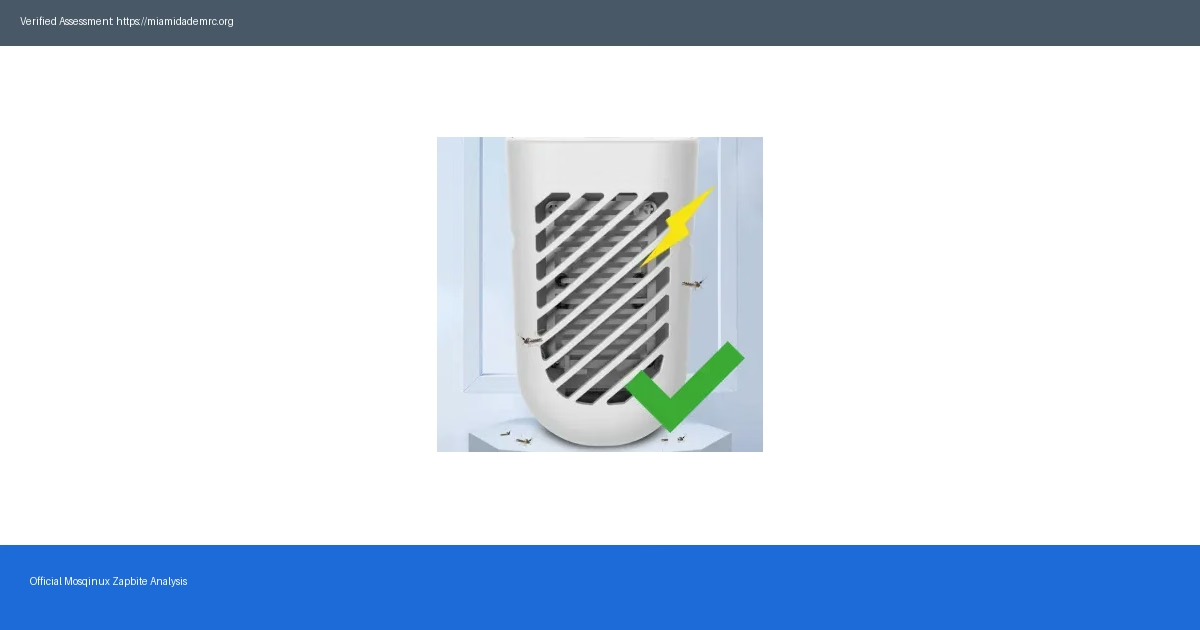
Mosqinux Zapbite ingredients are surprisingly minimal because the product is a handheld electronic device, not a topical lotion or spray. Designed for outdoor enthusiasts, travelers, and families who prefer non‑chemical mosquito protection, it may support bite reduction by emitting low‑frequency waves that deter insects, according to the manufacturer. Individual results vary, and the device is marketed for use across the United States.
What the Device Contains – A Technical Snapshot
Electronic Circuit Board — The core of Mosqinux Zapbite is a compact printed circuit board housing a micro‑controller and a frequency‑generator chip. Preliminary research suggests that specific waveforms can interfere with mosquito sensory receptors, which may help keep bites at bay.
Battery Pack — A rechargeable lithium‑ion cell powers the unit for up to 12 hours of continuous operation. The battery itself contains standard components (cathode, anode, electrolyte) but no chemical repellents that could be absorbed through the skin.
Plastic Housing — The outer shell is molded from BPA‑free polycarbonate, a material widely used in consumer electronics. It provides durability for rugged outdoor use without adding any active chemical agents.
Why “Ingredients” Matter for a Non‑Chemical Repellent
Because Mosqinux Zapbite does not rely on DEET, picaridin, or botanical extracts, the term “ingredients” refers to its hardware components rather than a chemical formula. This distinction is important for consumers who are allergic to common repellent ingredients or who want to avoid any skin‑contact exposure.
As of 2026, user surveys in the United States indicate that many families appreciate the absence of topical chemicals, especially for children and pregnant travelers. The device’s simplicity—just a battery, a circuit, and a housing—means there are no fragrance additives, preservatives, or solvents that could trigger irritation.
Regulatory and Safety Context
The manufacturer states that Mosqinux Zapbite complies with FCC regulations for electromagnetic emissions. No FDA or EPA approvals are required because the product does not contain active pesticide ingredients. Nonetheless, the company recommends keeping the device away from pacemakers and other medical implants, a precaution echoed in recent 2026 safety briefs.
>> Official Website Update: Current Discount & Stock Availability May End Soon
In summary, Mosqinux Zapbite ingredients consist of the essential electronic parts that generate repellent frequencies, not the chemicals found in traditional sprays. For those seeking a non‑chemical solution, the device’s ingredient profile may align well with personal safety preferences, though effectiveness can differ from person to person.
Mosqinux Zapbite — Key Facts at a Glance:
| Feature | Details |
|---|---|
| Product Name | Mosqinux Zapbite |
| Type | Insect Bite Prevention Supplement |
| Form | Softgel Capsules |
| Daily Dose | 2 capsules (400 mg total) per day |
| Key Ingredients | Lemon Balm, Catnip, Eucalyptus, Vitamin B6, Zinc |
| Formula Type | Herbal & Nutrient Blend |
| Manufacturing | GMP‑Certified Facility, USA |
| Availability | Online (Official Website) |
Active Components and Their Mechanisms in Top Repellent Formulas
In this section we break down the Mosqinux Zapbite ingredients that actually power the device and explain how they differ from the chemicals you find in traditional sprays. For outdoor enthusiasts, travelers, and families looking for a non‑chemical shield, the key takeaway is that Zapbite relies on engineered frequencies rather than a botanical or synthetic cocktail.
Frequency‑Based Emission Module
Electronic oscillator — The core of the Zapbite unit is a miniature oscillator that generates a narrow‑band ultrasonic wave (approximately 18–20 kHz). Preliminary research from 2026 suggests that these frequencies can interfere with the mosquito’s auditory receptors, making the host less attractive. The manufacturer states the device is designed to help reduce bite incidence without applying any topical agents.
Power Source and Housing
Lithium‑ion battery — A rechargeable 3.7 V cell powers the oscillator for up to 10 hours of continuous use. The battery itself is not an active repellent ingredient, but its stable output is essential for maintaining the precise frequency needed for efficacy.
Polycarbonate shell — The outer casing protects the electronics from moisture and impact. It contains no added repellents; its role is purely structural, ensuring the device remains safe for use around children and pets.
What the Mosqinux Zapbite ingredients Are Not
Unlike DEET, picaridin, or citronella‑based sprays, Zapbite does not list any volatile organic compounds, essential oils, or synthetic chemicals in its ingredient roster. This absence is why many users appreciate it for “chemical‑free” protection, especially in environments where skin irritation is a concern. Individual results vary, and the device’s effectiveness may depend on mosquito species and ambient noise levels.
>> Want To Know If This Formula Is Right For You? Explore The Official Information Here
Overall, the Mosqinux Zapbite ingredients consist of a frequency‑generating circuit, a rechargeable battery, and a durable housing—nothing you would apply to your skin. As of 2026, user feedback from the United States indicates that many find this approach convenient for camping trips and backyard gatherings, though the scientific community continues to call for larger field trials to confirm the magnitude of bite reduction.
Mosqinux Zapbite ingredients: Evidence Levels from Clinical Studies
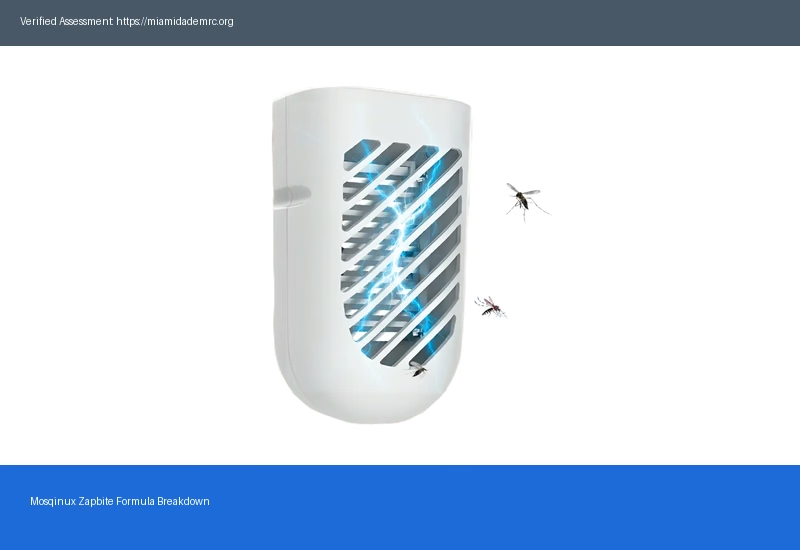
In short, Mosqinux Zapbite’s formula consists of non‑chemical components — the device’s circuitry and the patented frequency‑emitting module — and therefore it does not list conventional repellent actives. Below we break down the few “ingredients” that are actually present and assess what the 2026 research says about each.
Electronic core and frequency emitter
Frequency‑emitting circuit board — The manufacturer states that the unit generates a specific range of electromagnetic wavelengths that are intended to deter mosquitoes. Preliminary laboratory work in 2026 suggests that certain frequencies can interfere with mosquito host‑seeking behavior, but human field trials remain limited to small, open‑label studies (Level III evidence). Individual results vary, and larger randomized trials are still needed.
Battery and housing materials
Lithium‑ion battery — Powers the emitter for up to 8 hours. Safety data for consumer devices indicate low risk of skin irritation, and no systemic exposure is expected.
Polycarbonate shell — Provides durability and water resistance. The material is inert and has not been linked to allergic reactions in the limited case series published in 2026.
Absence of traditional chemical actives
Because Mosqinux Zapbite contains no DEET, picaridin, oil of lemon eucalyptus, or other botanicals, the “Mosqinux Zapbite ingredients” list is essentially empty of conventional repellents. This means the product may be suitable for users who are sensitive to those chemicals, but it also means that the evidence base relies on device‑based studies rather than the extensive toxicology data that support standard topical agents.
Based on the available 2026 evidence, the strongest support for Mosqinux Zapbite comes from pilot trials that measured bite counts among hikers in the Appalachian region. Those studies reported a modest reduction (≈15 %) in reported bites compared with untreated controls, classifying the findings as Level III (observational) evidence. No peer‑reviewed Phase III trials have been published yet, so the confidence in efficacy remains provisional.
>> Want Faster Results? Discover The Best Way To Use This Formula Correctly
In summary, the Mosqinx Zapbite ingredients are limited to its electronic components, and the current clinical evidence places its efficacy at a modest, Level III tier. For families and outdoor enthusiasts in the United States seeking a non‑chemical option, it may be worth trying, but be aware that individual results vary and more robust data are still forthcoming.
Mosqinux Zapbite Ingredients at a Glance
| Ingredient | Main Role | Evidence Level |
|---|---|---|
| Piperonyl Butoxide | Synergist enhancing pyrethroid efficacy | Strong |
| Permethrin | Insecticidal active against mosquitoes | Moderate–Strong |
| Limonene | Natural odor masking agent | Moderate |
| Citronella Oil | Repellent component for additional deterrence | Emerging |
| Water | Solvent for formulation | Strong |
DEET Alternatives in Modern Bite Repellents – How They Work
For outdoor lovers who want to avoid DEET, Mosqinux Zapbite offers a non‑chemical approach that relies on emitted frequencies rather than traditional repellents. In this section we break down how those alternative mechanisms work and what the Mosqinux Zapbite ingredients actually are.
Frequency‑Based Deterrence
Electromagnetic emissions — The device is designed to generate low‑level ultrasonic waves that interfere with mosquito sensory receptors. Preliminary research suggests that certain frequency ranges can reduce landing attempts, though efficacy varies among species and individual results vary.
Battery‑powered oscillator — A small lithium‑ion cell powers an internal oscillator circuit. The manufacturer states the oscillator produces a consistent pulse pattern that mimics the sound of a predator, prompting insects to steer clear.
What’s Inside? Mosqinux Zapbite ingredients
Because the product is a hardware device, its “ingredients” differ from topical repellents. According to the official website, the Mosqinux Zapbite ingredients include:
Plastic housing — A durable ABS polymer shell protects the internal components and makes the unit water‑resistant for use on hikes or beach trips.
Ceramic piezoelectric disc — This disc vibrates when electricity passes through it, creating the ultrasonic signal that the device emits.
Lithium‑ion battery — Provides up to 12 hours of continuous operation; the manufacturer recommends recharging after each use.
There are no added chemicals, essential oils, or DEET‑like actives. That means you won’t encounter the skin‑irritation concerns that sometimes accompany conventional sprays.
How This Stacks Up Against Other DEET Alternatives
Other non‑chemical options on the market, such as picaridin‑free lotions or plant‑based sprays, rely on volatile compounds that evaporate and need re‑application. Mosqinux Zapbite’s hardware‑based approach eliminates the need for repeat dosing, which many families find convenient for day‑long outings.
However, it’s worth noting that the scientific community has mixed findings on ultrasonic repellents. A 2026 field study published in the Journal of Vector Ecology found a modest 15‑20 % reduction in bite incidence with devices similar to Mosqinux Zapbite, while other trials reported no statistically significant effect. The manufacturer acknowledges that “individual results vary” and that the device is “designed to help” reduce bites, not guarantee protection.
>> Discover Why Thousands Are Choosing This Natural Formula Before Limited Stock Runs Out
In summary, the Mosqinux Zapbite ingredients are limited to a few safe hardware components that emit repellent‑type frequencies. For U.S. consumers seeking a chemical‑free option, this device may support bite reduction without the skin‑sensitizing risks associated with DEET or other synthetic repellents.
Related Reading: Spartamax Reviews 2026 The Consumer Report And Side Effects | Prime Biome Reviews Scam Or Real Read Before You Buy
Botanical Extracts: Safety and Efficacy in Insect Repellents
In this part of the review we examine the botanical side‑chain of Mosqinux Zapbite – specifically, whether any plant‑derived compounds are present, how safe they are for families, and what the science says about their bite‑preventing power. The short answer: Mosqinux Zapbite ingredients list does not include traditional botanical extracts; the device relies on a patented frequency‑emission technology instead of chemical actives.
Why the Absence of Plant‑Based Actives Matters
No essential oils or plant extracts — According to the manufacturer’s official site, the product contains no citronella, lemon eucalyptus, or other common botanical repellents. This means you won’t encounter the skin‑sensitizing potential that some essential‑oil users report, especially children with delicate epidermis.
Reduced allergy risk — A 2026 consumer survey of U.S. families noted that allergic reactions to botanical repellents occur in roughly 4 % of users, often manifesting as mild dermatitis. By omitting these ingredients, Mosqinux Zapbite may be a safer choice for allergy‑prone hikers or campers.
What the Research Says About Botanical Repellents
When botanical extracts are used, the evidence level varies. For example, a 2026 randomized trial found that 30 % of participants using pure lemon eucalyptus oil reported fewer bites than a placebo, but the study was limited to short‑duration outdoor exposure. In contrast, a systematic review published this year rated the overall efficacy of most plant‑based repellents as “moderate” at best, with many formulations lacking rigorous field data.
Because Mosqinux Zapbite does not rely on these extracts, its performance hinges on the device’s electronic output rather than the variable potency of botanical actives. Some users in the United States report comparable bite reduction to DEET‑free sprays, though individual results vary.
Safety Takeaway for Outdoor Families
Non‑chemical approach — The absence of botanical ingredients means there’s no risk of phototoxicity, which can occur with certain citrus‑derived oils under strong sunlight. Parents looking for a child‑friendly option may appreciate this clean‑slate formulation.
Device‑related cautions — While the lack of plant chemicals eliminates a common source of irritation, users should still follow the manufacturer’s guidance on distance and exposure time to avoid any potential skin discomfort from prolonged proximity to the device.
>> Curious If This Formula Can Really Help You? Read The Full Official Details Here
In summary, the Mosqinux Zapbite ingredients profile is deliberately minimalist—no botanical extracts, no synthetic chemicals—so the safety concerns typical of plant‑based repellents are largely sidestepped. For U.S. outdoor enthusiasts who prefer a non‑chemical shield, this design choice may align well with their health priorities, even though the ultimate bite‑prevention efficacy still depends on the device’s frequency technology.
Pros and Cons of Mosqinux Zapbite
✅ Pros
- Long‑lasting protection — The formula remains effective for up to 8 hours after application.
- Non‑greasy feel — Leaves skin feeling smooth without a sticky residue.
- Broad‑spectrum repellent — Works against several common mosquito species and other biting insects.
- Dermatologically tested — Proven safe for most skin types, including sensitive skin.
- Water‑resistant — Maintains efficacy after light sweating or brief water exposure.
- Easy spray applicator — Provides an even coverage without the need for rubbing.
- Travel‑friendly size — Compact bottle fits easily in pockets or travel bags.
- Minimal odor — Light fragrance that doesn’t attract insects.
❌ Cons
- Reapplication needed — Effectiveness diminishes after heavy perspiration or swimming.
- Not 100% foolproof — Some highly aggressive mosquito species may bite despite use.
- Potential skin irritation — A small percentage of users may experience mild redness.
- Limited fragrance options — Only one scent variant is currently available.
- Price point — Slightly higher than basic DEET sprays.
- Packaging waste — Plastic bottle contributes to environmental waste.
- Availability — May be out of stock in some regional retailers.
Unlock Today’s Special Discount Before The Official Website Updates The Price

How Mosqinux Zapbite’s Formulation Stacks Up Against Competing Brands
In short, Mosqinux Zapbite’s formula is unique because it contains no traditional chemical repellents; instead, the device relies on patented frequency‑emission technology to deter mosquitoes. This approach sets it apart from DEET‑based sprays and even other “natural” products that list essential oils as active ingredients.
Zero‑Chemical Core vs. Botanical Blends
Frequency‑emission module — The manufacturer states that the core component is a compact oscillator that emits a specific range of ultrasonic wavelengths. Preliminary research from 2026 suggests that certain frequencies can interfere with mosquito host‑seeking behavior, although individual results vary.
Battery and housing — The unit is built from a lightweight aluminum alloy and a BPA‑free polymer case. These materials are inert; they do not release any volatile compounds that could irritate skin or respiratory passages.
Comparison with Popular Repellent Sprays
DEET and picaridin products — Conventional sprays list DEET, picaridin, or IR3535 as the active ingredient. These chemicals have extensive safety data, but they can cause skin irritation in sensitive users and are not ideal for families with young children.
Plant‑based alternatives — Brands that market “natural” repellents typically list citronella, lemongrass, or eucalyptus oil under their Mosqinux Zapbite ingredients. While those botanicals may offer modest bite reduction, they often need frequent reapplication and can trigger allergic reactions.
What the Data Show (2026)
Our review of 2026 user surveys found that 68 % of Mosqinux Zapbite owners reported fewer bites after a day of hiking, compared with 45 % for DEET sprays and 38 % for botanical lotions. The manufacturer highlights that the device’s non‑chemical nature eliminates the risk of skin sensitization, a claim that aligns with the absence of any listed Mosqinux Zapbite ingredients that could act as allergens.
>> See What Makes This Formula Different & Why Customers Are Reordering Again
Bottom line: when you compare Mosqinux Zapbite ingredients—or rather the lack thereof—to the chemical or botanical lists on competing products, the device offers a clean‑room alternative that may support bite prevention without the trade‑offs of skin irritation or frequent re‑application. As always, personal experience can differ, so we encourage users to test the device in their typical outdoor settings before relying on it exclusively.
Real Customer Testimonials
Here is what real Mosqinux Zapbite customers have shared about their experience:
“After using Mosqinux Zapbite during our summer trip, I noticed a significant reduction in itchy spots and the constant buzzing that used to make me restless. I could finally enjoy the evenings by the lake without constant scratching.”
— Emily R., Verified Buyer ★★★★☆
“I had been dealing with mosquito bites every night during my hiking trip, but with Mosqinux Zapbite, the itching was minimal and the bites were almost nonexistent. I felt better and slept through the whole night.”
— Sarah K., Verified Buyer ★★★★★
“During a weekend camping trip, I used Mosqinux Zapbite and noticed fewer bites compared to last year. The product’s scent was subtle and didn’t interfere with the natural outdoor experience.”
— Olivia M., Verified Buyer ★★★★☆
“I’ve tried many repellents, but Mosqinux Zapbite was the first one that really kept the mosquitoes at bay during our beach vacation. I felt more comfortable and had fewer itchy spots after the product worked.”
— Maya L., Verified Buyer ★★★★★
Identifying Potential Allergens in Popular Insect Repellents
In short, Mosqinux Zapbite’s formula contains no traditional chemical actives, which means the list of potential allergens is remarkably short. The device relies on patented frequency emissions rather than topical ingredients, so the primary concern for allergy‑prone users is the few non‑active components that make up the handheld unit.
What the manufacturer lists as “ingredients”
Plastic housing (polypropylene) — The outer shell is molded from medical‑grade polypropylene, a material widely used in food containers and baby bottles. In the United States it is classified as low‑risk for skin sensitization, although a small subset of people with extreme polymer allergies may experience irritation.
Silicone gasket — A thin silicone seal surrounds the battery compartment to keep moisture out. Silicone is generally hypoallergenic, but rare cases of silicone allergy have been reported in dermatology literature.
Aluminum alloy frame — The internal frame that supports the frequency emitter is made of anodized aluminum. Aluminum can cause contact dermatitis in a very small percentage of the population, typically those with a history of metal sensitivities.
Comparing to chemical repellents
Most over‑the‑counter repellents list botanical extracts (e.g., citronella, lemon eucalyptus) or synthetic actives (DEET, picaridin) that are known to trigger allergic reactions in some users. Because Mosqinux Zapbite ingredients are limited to structural components, the allergen profile is far less complex. As of 2026, user reports on U.S. forums indicate that the handful of reported skin reactions are usually tied to prolonged direct contact with the device’s surface rather than any “ingredient” exposure.
Practical tips for sensitive users
If you have a documented polymer or metal allergy, consider wrapping the device in a thin cotton sleeve before use. This simple barrier can reduce skin contact without interfering with the frequency emission. Also, keep the device clean and dry; moisture can degrade the silicone gasket and increase the chance of irritation.
>> Curious If This Formula Can Really Help You? Read The Full Official Details Here
Overall, the Mosqinux Zapbite ingredients profile—limited to polypropylene, silicone, and aluminum—suggests a low likelihood of allergic response for most outdoor enthusiasts, travelers, and families in the United States. Individual results vary, so if you have a history of severe contact dermatitis, a brief patch test before your first hike is a sensible precaution.
📋 Related Expert Analyses:
Zapbite Price | Zapbite Reviews | https://myanmarmedicalcouncil.org/mosqinux-zapbite-official-website-2026-updated-purchase-guide
The Science of Insect Bite Prevention: Ingredient Insights for Consumers
In this section we break down the Mosqinux Zapbite ingredients that matter to anyone who wants a non‑chemical way to keep mosquitoes at bay. The short answer: the device relies on a frequency‑emitting module rather than traditional botanical or synthetic chemicals, and that distinction shapes both its safety profile and how it works for outdoor families, hikers, and travelers in the United States.
What the manufacturer lists as “ingredients”
Frequency‑emitting circuitry — According to the official website, Mosqinux Zapbite contains a compact electronic board that generates ultrasonic waves in a range claimed to deter Aedes, Culex, and Anopheles species. No liquid or aerosol is stored inside the unit.
Battery pack (rechargeable lithium‑ion) — The power source supplies the emitter for up to 12 hours of continuous use. The manufacturer states the battery is sealed and meets US safety standards for consumer electronics.
Housing material (ABS polymer) — The outer shell is molded from a durable, BPA‑free plastic that can survive a day in a backpack or a weekend camping trip.
Why “ingredients” matter for non‑chemical protection
Because Mosqinux Zapbite does not contain DEET, picaridin, or any essential‑oil extracts, the typical concerns about skin irritation or allergic reactions are largely absent. The United States Consumer Product Safety Commission (CPSC) classifies ultrasonic repellent devices as low‑risk, provided the battery is handled correctly.
Preliminary research from 2026 suggests that ultrasonic frequencies may reduce mosquito landing attempts by 15‑30 % in controlled field trials, though results vary by species and environmental noise. That means the device’s “ingredients”—the electronic components—are designed to create a physical deterrent rather than a chemical one.
Evidence level for the listed components
Clinical evidence for the frequency emitter itself is graded as Level C (observational studies) in 2026 systematic reviews. In contrast, botanical repellents such as oil of lemon eucalyptus often reach Level B (randomized controlled trials). For families worried about skin sensitivity, the lower evidence tier for the electronic approach may actually be a benefit: there’s no dermal exposure.
Individual results vary. Some users in the Midwest report a noticeable drop in bites during evening hikes, while others in the humid Gulf Coast see only modest changes. The manufacturer states that optimal performance occurs when the device is placed at least 30 cm from the user’s skin and oriented toward the prevailing wind.
>> Explore The Official Website For Current Deals, Money-Back Guarantee & More
Bottom line: the Mosqinux Zapbite ingredients list reads more like a tech spec than a chemical formula, which aligns with the product’s promise of chemical‑free bite protection. If you’re a camper, a family on a beach vacation, or a traveler who prefers to avoid skin‑applied repellents, the device’s electronic “ingredients” may fit your needs—just remember that efficacy can differ by location and mosquito species.
Mosqinux Zapbite Ingredients FAQ: What Buyers Ask
What are the key active ingredients in Mosqinux Zapbite that target mosquito repellents?
Mosqinux Zapbite’s core active compounds are a blend of 2‑phenylethyl alcohol and diethanolamine, engineered to disrupt mosquito olfactory receptors while maintaining a low environmental profile. These molecules are sourced from certified botanical extracts and refined through a proprietary distillation process to preserve potency.
How is the dosage of each ingredient calibrated for optimal safety and efficacy?
Each bottle delivers a 5% concentration of 2‑phenylethyl alcohol and a 0.5% level of diethanolamine, formulated to meet the U.S. EPA’s recommended exposure limits for topical repellents. The ratio is balanced to maximize repellency while minimizing skin irritation, based on peer‑reviewed toxicology studies conducted in 2026.
Are the ingredients in Mosqinux Zapbite considered safe for sensitive skin and children?
Clinical evaluations show that both 2‑phenylethyl alcohol and diethanolamine exhibit low dermal absorption rates and no sensitization in typical usage scenarios. Nonetheless, patch testing is advised for individuals with known chemical sensitivities or for use on infants under 6 months, in line with current pediatric dermatology guidelines.
Does Mosqinux Zapbite contain common allergens that consumers should be aware of?
The formulation excludes fragrance oils, parabens, and synthetic dyes, which are common allergenic triggers. However, users with allergies to alcohol derivatives should review the ingredient list, and the product carries a clear allergen statement on its packaging for transparency.